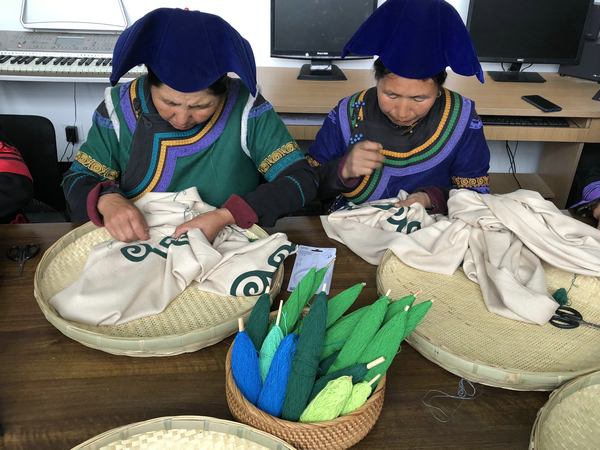
Yi Embroidery
Introduction
Yi embroidery, a vibrant form of artistic expression, has a rich history deeply ingrained in the culture of the Yi ethnic group residing primarily in Southwest China's Sichuan and Yunnan provinces. This traditional craft, known for its intricate patterns and vibrant colors, is a significant part of China's intangible cultural heritage. The art of Yi embroidery is not only a representation of the aesthetic sensibilities of the Yi people but also an embodiment of their cultural identity and historical continuity.
Historical Background
Yi embroidery dates back over 1,000 years, making it one of the oldest forms of traditional Chinese embroidery. The craft has been passed down through generations, primarily by women, and has played an essential role in the cultural preservation and expression of the Yi ethnic group. Historically, the Yi people have used embroidery to adorn their traditional costumes, which consist of pleated skirts, intricately designed upper garments, and elaborate headpieces. These garments are not merely functional but symbolic, often used in rituals and significant life events. Each pattern and color used in the embroidery holds cultural significance, representing various aspects of Yi folklore, spirituality, and daily life.
Techniques and Characteristics
Yi embroidery is characterized by its bold use of color and intricate designs. Traditional Yi embroidery often features motifs inspired by nature, such as flowers, butterflies, birds, and celestial bodies like the sun, moon, and stars. The colors red, yellow, and black are prominently used, symbolizing different traditional beliefs and values. The embroidery is typically done on fabrics like wool or cotton, utilizing a variety of stitches to create texture and depth. The craft requires great dexterity and precision, showcasing the embroiderer's skill in manipulating threads to form complex patterns.
Cultural Significance
Yi embroidery is more than a craft; it is a vital cultural symbol for the Yi people. It serves as a visual language that conveys stories, traditions, and values from one generation to the next. The practice of embroidery is often learned at a young age, with girls picking up the needle almost instinctively. This cultural practice reinforces communal ties and offers a sense of identity and pride among the Yi people. The designs often tell stories, with each pattern having a unique narrative or historical significance, such as representing ancient government offices or elements of nature.
Modern Adaptations and Economic Impact
In recent years, there has been a revival of interest in Yi embroidery, driven by both cultural preservation efforts and its potential economic benefits. Artisans like Axi Wuzhimo and entrepreneurs like Jin Ruirui have played crucial roles in innovating and promoting Yi embroidery. They have adapted traditional techniques to modern lifestyles, creating products such as handbags, shawls, and even incorporating embroidery into fashion designs showcased on international platforms like Milan Fashion Week.
Yi embroidery has also become a source of income for many Yi women, empowering them economically. Cooperatives and workshops have been established to train women in embroidery, allowing them to earn a living while preserving their cultural heritage. This has significantly contributed to poverty alleviation efforts in the Yi regions, with many women gaining financial independence through their craftsmanship.








